(Bloomberg) -- The Federal Reserve's preferred measure of underlying US inflation moderated in April and consumers dialed back their spending, supporting plans for an eventual reduction in interest rates.
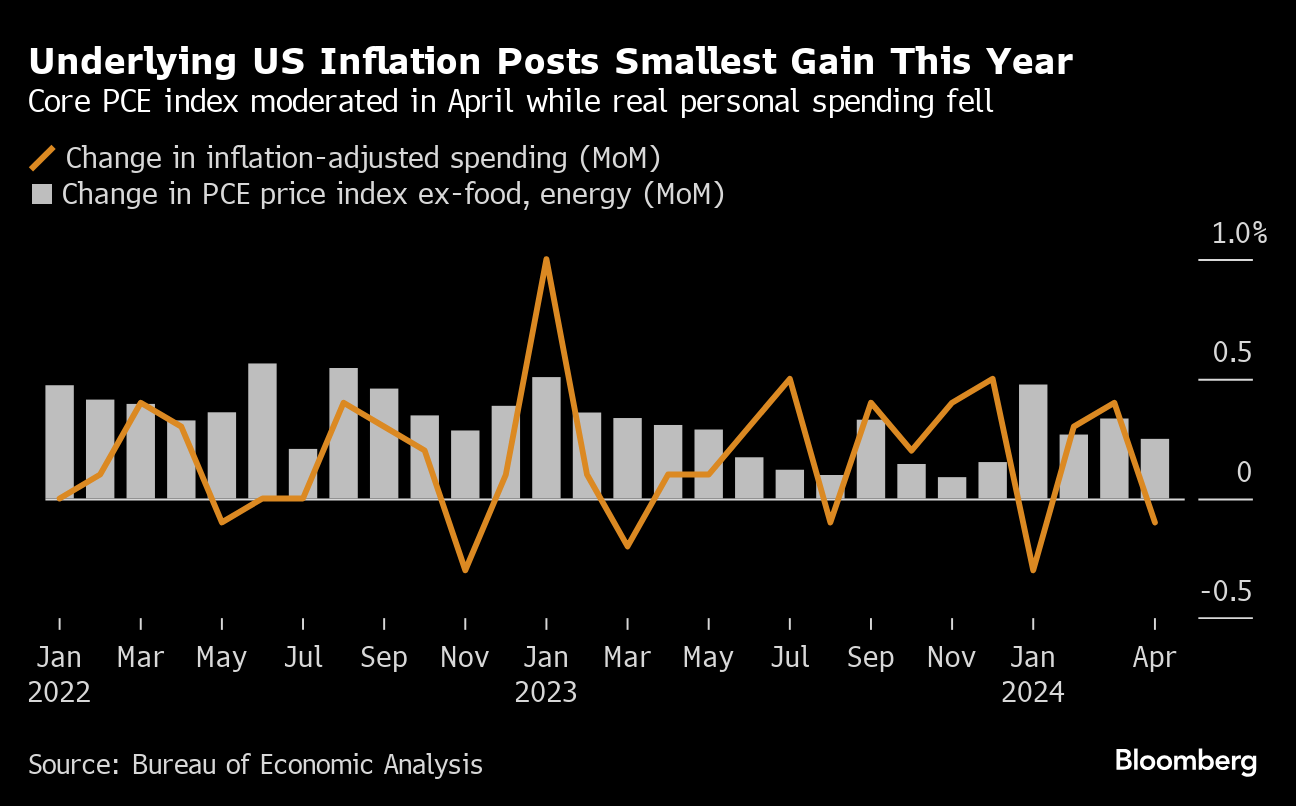
The so-called core personal consumption expenditures price index, which strips out the volatile food and energy components, increased 0.2% from the prior month. That marked the smallest advance of the year, according to Bureau of Economic Analysis data out Friday.
Inflation-adjusted consumer spending unexpectedly fell 0.1%, dragged down by a decrease in outlays for goods and softer services spending. Wage growth, the primary fuel for demand, moderated.
The report offers Fed officials some solace about the pathway for inflation after progress on price pressures was interrupted in the first quarter. At the same time, the April spending figures add to evidence that the year is off to a slow start for the economy.
Read more: From US Stores to Factory Floors, Second Quarter Starts Out Slow
Treasury yields moved lower and S&P 500 index futures gained, while the dollar index declined. Swaps traders still expect the Fed to cut rates at least once this year.
Central bankers have been increasingly squinting their eyes when looking at inflation data in an effort to make the most adequate policy decisions in what continues to be an uncertain economic scenario. On a three-decimal basis, the core metric rose 0.249% from March, the smallest advance this year.
“I look forward to the day when I don't have to go out two or three decimal places in the monthly inflation data to find the good news,” Fed Governor Christopher Waller said last week.
Central bankers pay close attention to services inflation excluding housing and energy, which tends to be more sticky. That metric climbed 0.3% after rising 0.4% in March, according to the BEA.
Spending Breakdown
Meanwhile household demand, while fueled by steady job and income growth, is showing signs of cooling. The BEA's report showed inflation-adjusted outlays for services rose 0.1%, the smallest gain since August. Spending on merchandise decreased 0.4% last month.
Goods outlays were restrained by declines in gasoline and vehicle purchases. While health care spending supported outlays for services, other categories such as restaurant meals, recreation and transportation decreased during the month.
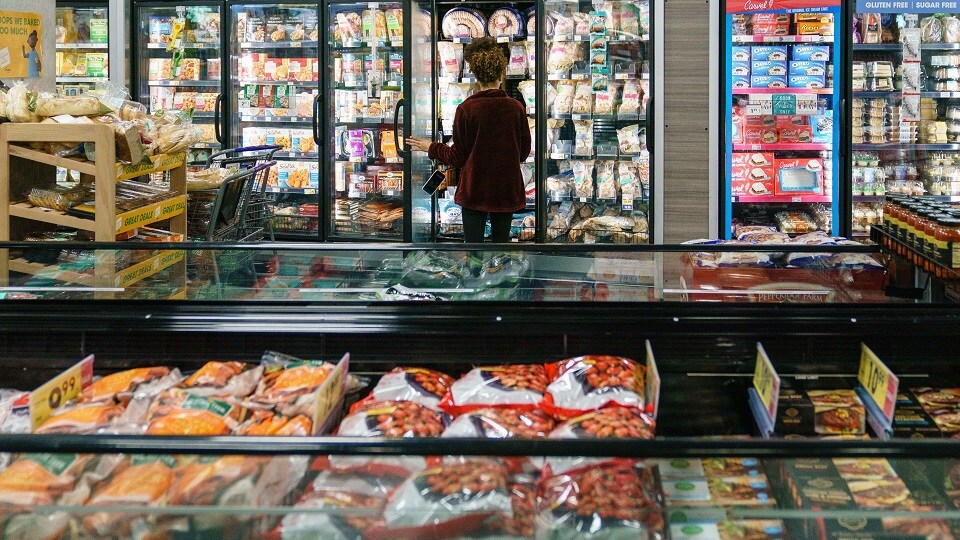
Looking ahead, with household debt hitting a record, consumer confidence generally trending lower and interest rates at a two-decade high, it remains to be seen to what extent consumers will continue powering the economy.
A report out Thursday showed the US economy grew at a slower pace in the first quarter than initially reported, in part because consumer spending was marked down on weaker demand for goods — particularly motor vehicles.
While demand for workers is still healthy, the pace of wage growth is cooling. Overall incomes rose 0.3% in April. Wages and salaries advanced 0.2%, the smallest gain in five months.
What Bloomberg Economics Says...
“The details of April's report are favorable as the Fed looks for signs that underlying inflation pressures are waning. Still, we expect the Fed to stay on hold at the June meeting as it awaits additional data that can boost its confidence inflation will cool.”
— Stuart Paul, Eliza Winger and Estelle Ou, economists
For the full note, click here
Real disposable income, the main support to consumer spending, fell 0.1% in April — the second decline in the last three months.
The saving rate held at 3.6%, matching the lowest since the end of 2022.
--With assistance from Cécile Daurat, Chris Middleton, Matthew Boesler, Liz Capo McCormick and Daniel Neligh.
(Adds graphic, video)
More stories like this are available on bloomberg.com
©2024 Bloomberg L.P.
Essential Business Intelligence, Continuous LIVE TV, Sharp Market Insights, Practical Personal Finance Advice and Latest Stories — On NDTV Profit.