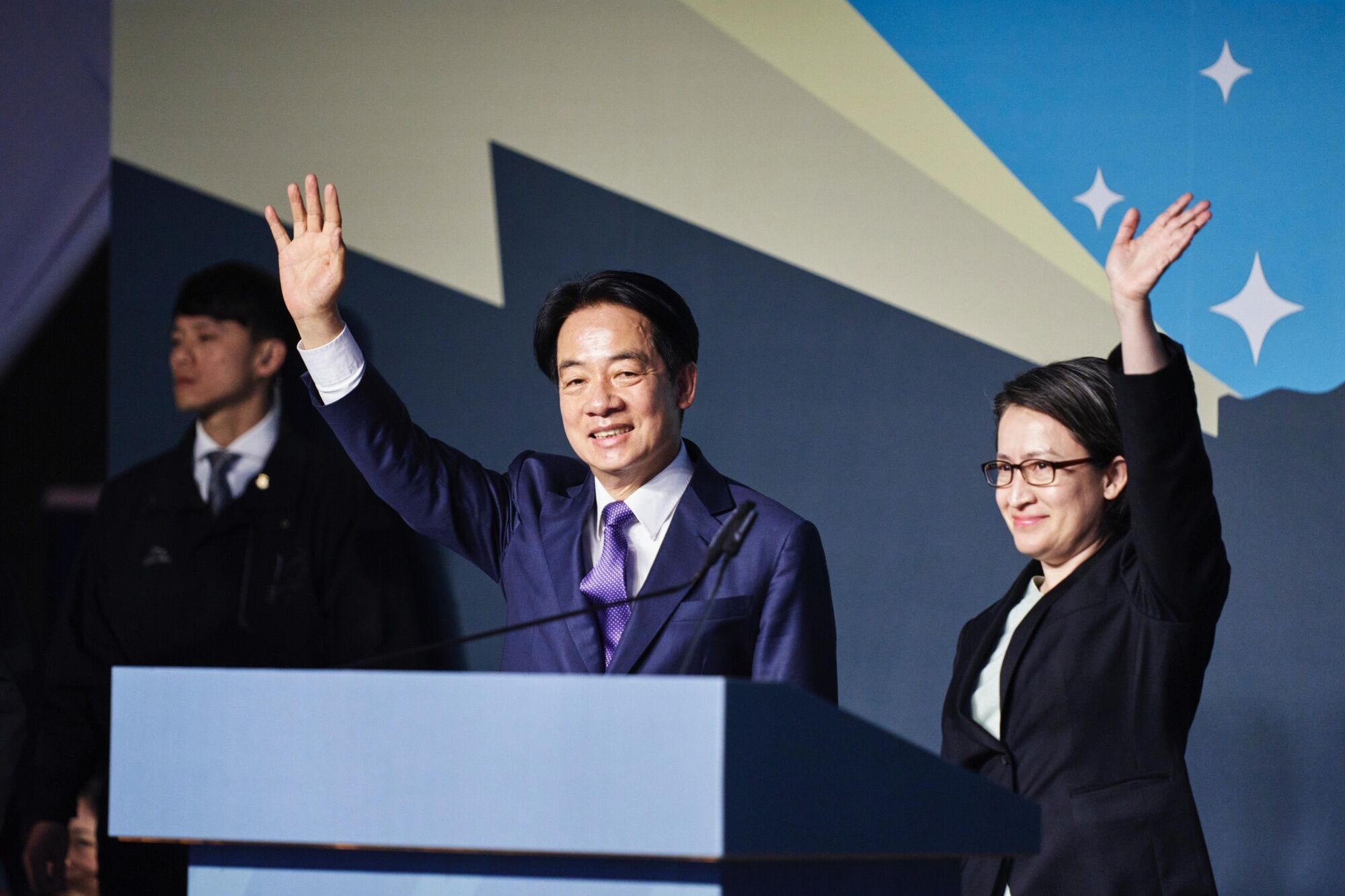
(Bloomberg) -- President Joe Biden said the US did not support independence for Taiwan, after voters there defied China and returned the governing Democratic Progressive Party — which has sought to limit Beijing's influence — to a third consecutive term.
“We do not support independence,” Biden told reporters Saturday as he departed the White House for Camp David.
The president's comment appears intended to assuage concerns in China, who had hoped Taiwan's current vice president, Lai Ching-te, would not be elected president. Results showed Lai, who has maintained close ties with the US, edging out Hou Yu-ih of the opposition Nationalist Party, who had pledged to expand trade and diplomacy with China.
Also Read | Layoffs Are Rising In Tech, But These Skills Are Helping People Unlock Better Pay
China has long claimed that the island of Taiwan is its territory, and President Xi Jinping has advocated for unification and refused to rule out a military intervention.
The US has traditionally adopted a policy of strategic ambiguity, where it acknowledges China's historical claims to sovereignty over Taiwan and maintains only unofficial relations with Taiwan while pledging defense assistance to the island. Still, suggestions by Biden that the US would intervene militarily if China were to invade Taiwan have roiled the relationship between the US and Beijing.
US Secretary of State Antony Blinken said the election shows the strength of Taiwan's “robust democratic system” and reiterated that the US “is committed to maintaining cross-Strait peace and stability, and the peaceful resolution of differences, free from coercion and pressure.”
The US will work with Lai and all party leaders in Taiwan “to further our longstanding unofficial relationship” consistent with the US's one-China policy, he said in a statement.
House Speaker Mike Johnson will ask a delegation of House lawmakers to travel to Taipei after Lai's inauguration in May, he said in a post on X, formerly known as Twitter.
--With assistance from Ashleigh Carrington Fields.
(Updates with Blinken, Johnson statements starting in sixth paragraph.)
More stories like this are available on bloomberg.com
©2024 Bloomberg L.P.
Essential Business Intelligence, Sharp Market Insights, Practical Personal Finance Advice, Daily Fuel, Gold and Silver Prices and Latest Stories — On NDTV Profit.