(Bloomberg Opinion) -- A lone polar bear on an iceberg. This year's Wildlife Photographer of the Year People's Choice Award winner is, in many ways, a photo we've seen before. It's a peaceful scene, with the slumbering bear reminiscent of a contented house cat. Yet it's a reminder that all life depends on ecosystems that are growing increasingly fragile as the planet heats with our greenhouse-gas emissions.
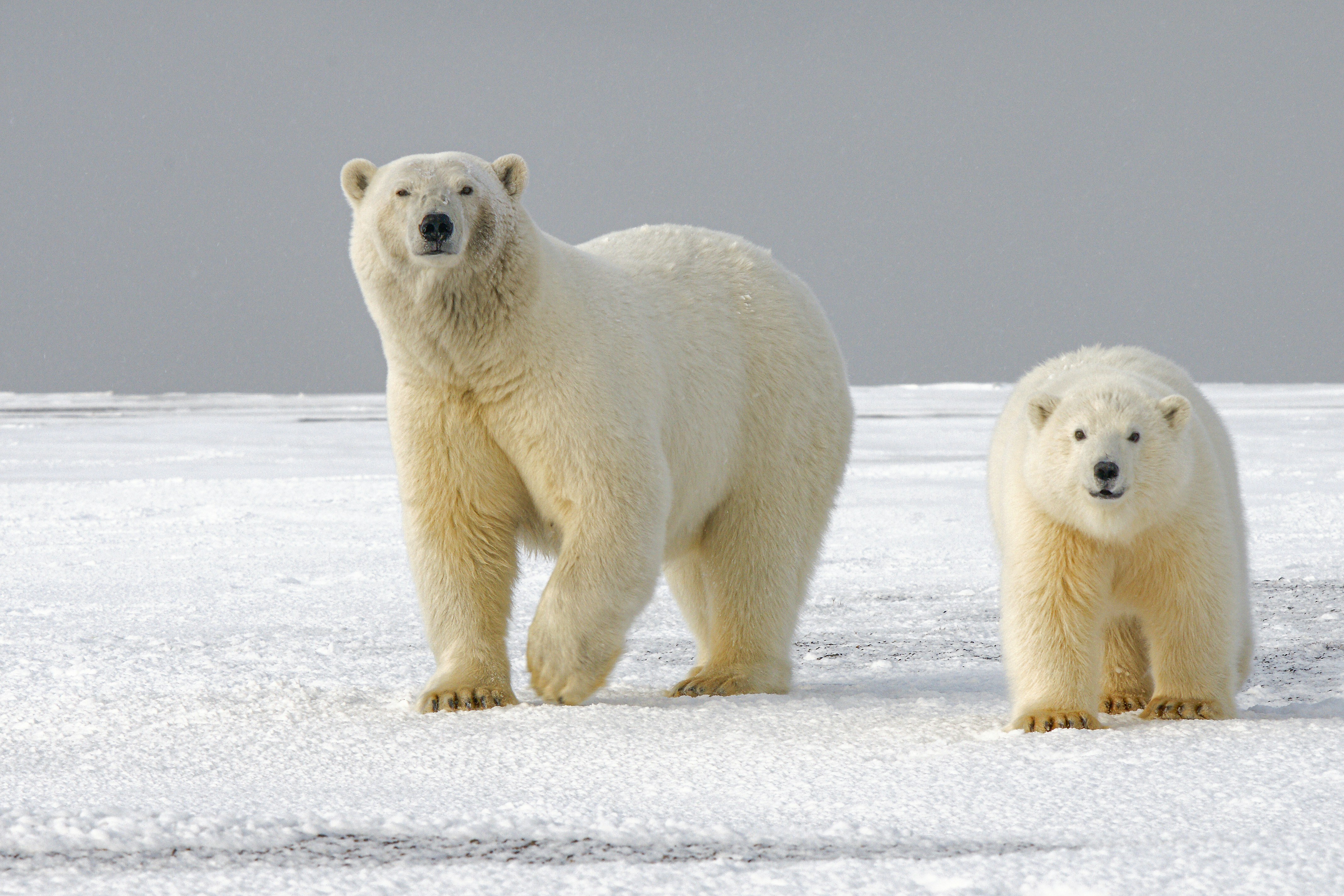
A new study underscores the same message of fragility through images of polar bears in a landscape we rarely envisage — terrain completely devoid of snow or ice. Researchers tracked 20 bears in Manitoba, Canada, equipping them with video collars to monitor activity levels and food intake. There's a lesson for us all in the surprising and sobering results.
Polar bears in this region have long become land-based during ice-free periods. But the time spent without sea ice – periods when they can't hunt their usual prey – is getting longer. In the 1980s, they'd be on land for about 110 days. That's since increased by three weeks, and is only expected to get longer thanks to the climate crisis (the Arctic is warming roughly four times faster than the planet as a whole).
While on shore, bears were thought to fast, conserving precious energy until the sea ice returned. However, the study showed differences in survival strategies between individuals. Some didn't seek sustenance. The laziest bear rested for 98% of the time – making lead author Anthony Pagano's job of watching 115 hours of video footage a slog at points. But others were surprisingly active, moving across the landscape and consuming a range of terrestrial foods including bird carcasses, duck eggs, berries and seaweed.
But it didn't really matter what strategies the bears employed. Apart from one lucky nanuk who was able to feed on a large mammal, all of them lost body mass. While land-based fodder compensated for the energy expended seeking it out, berries and birds don't sustain a polar bear. They're simply too big, explains Pagano, who is a research wildlife biologist at the United States Geological Survey, a US government agency. The implication is that if the ice-free period extends for long enough, the bear population in the area would starve.
The animals were more active than expected, which raises a few extra risks. The first is knock-on effects for sea-bird colonies and other land-based creatures, who may end up getting preyed upon more than they're used to. The other big consequence is that, in their search for food, hungry bears may wind up in human settlements, including communities not accustomed to having apex predators in their backyards. That makes the development of management techniques to keep both bears and humans safe crucial.
Contrary to the researchers' expectations, there was no correlation between energy expenditure and body condition. In other words, the driver behind the different tactics is individual-level variation: some bears may simply be lazier than others.
Pagano told me that there were some behaviors with no clear explanation. Three individuals, for instance, spent between 10% and 16% of their time swimming, an energy-intensive activity for the world's largest living bear species. Even though two out of three did find marine mammal carcasses, looking at the wind speed and direction, Pagano and his team concluded it was unlikely they could smell food in the water from the shore.
One young female meanders along in the water before she presumably catches the scent of a beluga whale carcass, makes a sharp turn eastwards and continues swimming along a much straighter line. Yet the deceased didn't end up serving as a meal – the bear was only observed feeding on it for 35 seconds out of the six hours she spent with it – but as a buoy to rest on. In total, the bear swam 175 kilometers (109 miles) for little gain. Similarly, when an adult female who found a seal carcass out at sea attempted to bring it to shore, she eventually dropped it during her swim after only feeding on it for a total of 20 seconds.
There's no knowing why these three bears swam so far, but it put them at a disadvantage: They each had the earliest predicted time of starvation for their respective age and gender.
There's a tendency to believe animals have an unimpeachable survival instinct — that a species will behave, as a group, in the same, optimal way. But just as humans aren't always the rational actors some economists model us to be, neither are animals. This doesn't make them stupid, but speaks instead to their intelligence: Each bear is trying to creatively solve the puzzle of how to stay alive in a challenging scenario.
Some behavior, such as the long swims, could be categorized as maladaptation, which humans also fall prey to. In trying to adapt to the climate crisis, projects can actually make us more vulnerable or simply waste resources. For example, we keep building higher flood barriers, only to see the water redirected to an area without protections or have them breached as climate change intensifies storms. In some cases, efforts to make farming resilient to drought actually made the farms less water-secure.
We don't know if those bears learned that swimming brings little reward. But, as humans, we have a unique advantage to avoid the same maladaptive mistakes: We can review our actions as well as the decisions of others, collecting data and modeling impacts to optimize our collective blueprint for survival in a changing world. We can also read studies about polar bears — and vow both to learn from their behavior and protect them.
More From Bloomberg Opinion:
-
California Floods, Chile Fires Are Just the Start: Mark Gongloff
-
We Need an Inoculation Against Climate Lies: Lara Williams
- Why I Hate Pandas and You Should Too: Timothy Lavin
This column does not necessarily reflect the opinion of the editorial board or Bloomberg LP and its owners.
Lara Williams is a Bloomberg Opinion columnist covering climate change.
More stories like this are available on bloomberg.com/opinion
©2024 Bloomberg L.P.
Essential Business Intelligence, Continuous LIVE TV, Sharp Market Insights, Practical Personal Finance Advice and Latest Stories — On NDTV Profit.