(Bloomberg) -- Oil rallied as Israeli Prime Minister Benjamin Netanyahu's dismissal of a potential cease-fire in the Israel-Hamas war triggered algorithmic buying in markets.
West Texas Intermediate rose 3.2% to top $76 a barrel in a rally partly sparked by Netanyahu's comments that he sees “no other solution than total victory” and later extended by trend-following algorithms. Last week, crude slumped on news of cease-fire negotiations and their potential to ease the tensions in a region that accounts for about a third of the world's oil output.
Strikes in Iraq are increasing the chances of a broadening conflict in the Middle East — boosting energy-supply risks — and providing tailwinds for crude markets, said Daniel Ghali, a commodity strategist at TD Securities. At the beginning of the session, Ghali expected commodity trading advisers to increase their total buying by 30% of their maximum position.
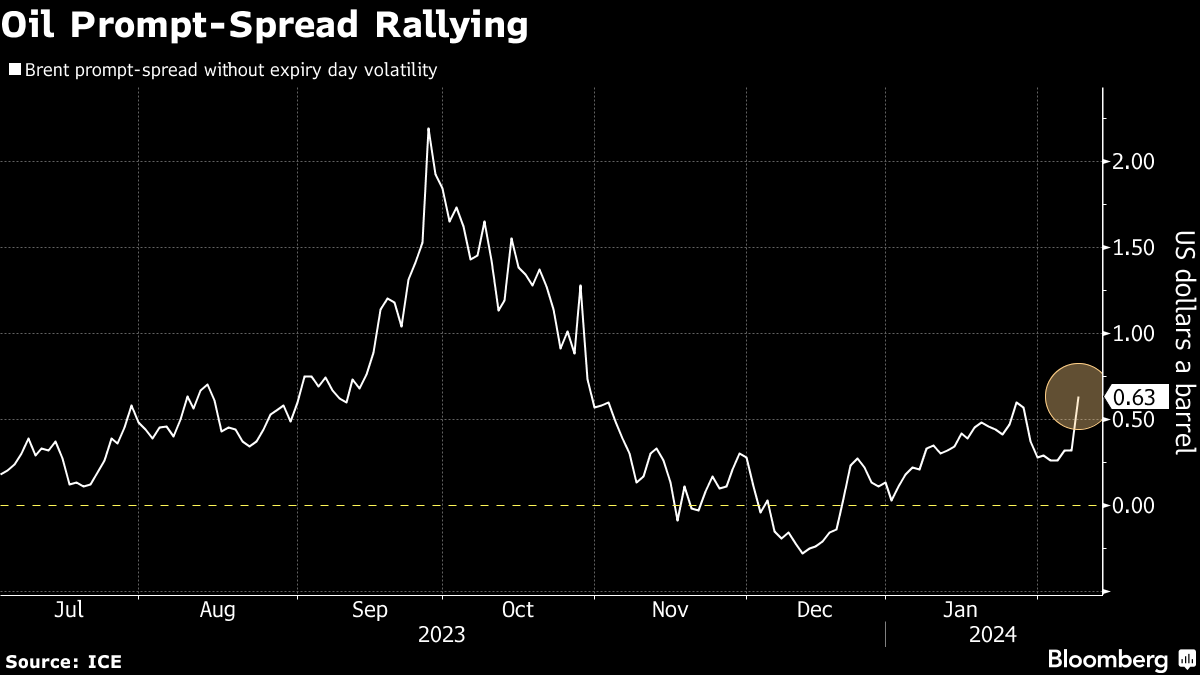
Signs of crude's momentum also showed further along the futures curve, with Brent's prompt spread — the difference between its two nearest contracts — strengthening to 63 cents in backwardation, the highest in three months, excluding volatile contract expiration dates.
Adding to concerns of supply disruptions, major shipping companies are warning that the security situation in the Red Sea is continuing to deteriorate. Swaths of the merchant fleet have been avoiding the waterway since attacks by the Houthis began in mid-November. The area grew even more volatile after the US and UK launched airstrikes in the middle of last month, prompting major owners in all sectors to avoid the region.
Restraining the price gains are apparent sluggishness in the Chinese economy and fading expectations that interest rates will be cut soon. Volatility in options markets has been sliding, reflecting the generally lackluster trading this year, despite the barrage of geopolitical and macroeconomic headlines.
More stories like this are available on bloomberg.com
©2024 Bloomberg L.P.
Essential Business Intelligence, Continuous LIVE TV, Sharp Market Insights, Practical Personal Finance Advice and Latest Stories — On NDTV Profit.