Premier Energies IPO: All You Need To Know
Premier Energies Ltd. plans to raise up to Rs 2,830.4 crore through an initial public offering, which is set to open on Aug. 27. The IPO consists of a fresh issue of 2.87 crore shares, totaling Rs 1,291.4 crore, and an offer for sale of 3.42 crore shares, aggregating Rs 1,539 crore.
The solar cell manufacturer has set a price band of Rs 427–450 per share with a face value of Re 1 each for the issue, which closes on Aug. 29. At the upper price band, the market cap of PEL stands at over Rs 20,200 crore, according to NDTV Profit's calculations.
The minimum lot size for retail investors is 33 shares, requiring an investment of at least Rs 14,850. For small non-institutional investors, the minimum lot size is 462, amounting to Rs 2.07 lakh. The minimum lot size for big non-institutional investors is 2,244, totaling over Rs 10 lakh, according to the red herring prospectus.
Issue Details
Issue opens: Aug. 27.
Issue closes: Aug. 29.
Issue price: Rs 427- 450 per share.
Total issue size: Rs 2,830.4 crore.
Fresh Issue: Rs 1,291.4 crore.
Offer for sale: Rs 1,539 crore.
Bid lot: 33 shares.
Listing: BSE and NSE.
Use Of Proceeds
The company plans to utilise the net proceeds for the following objects:
To invest in subsidiary Premier Energies Global Environment Pvt. for part-financing of the establishment of a 4-gigawatt solar PV TOPCon cell and 4 GW Solar PV TOPCon module manufacturing facility in Hyderabad.
General corporate purposes.
PEL plans to spend up to Rs 968.6 crore for the investment in its subsidiary. Around Rs 484.3 crore will be deployed in the current financial year, while Rs 484.3 crore will be deployed in the next fiscal.
Business
Founded in April 1995, PEL manufactures integrated solar cells and solar panels. The company is also the second-largest solar cell and module manufacturer in India as per capacity. As of March, it has 16.2% market share in the total solar cell-installed capacity in India
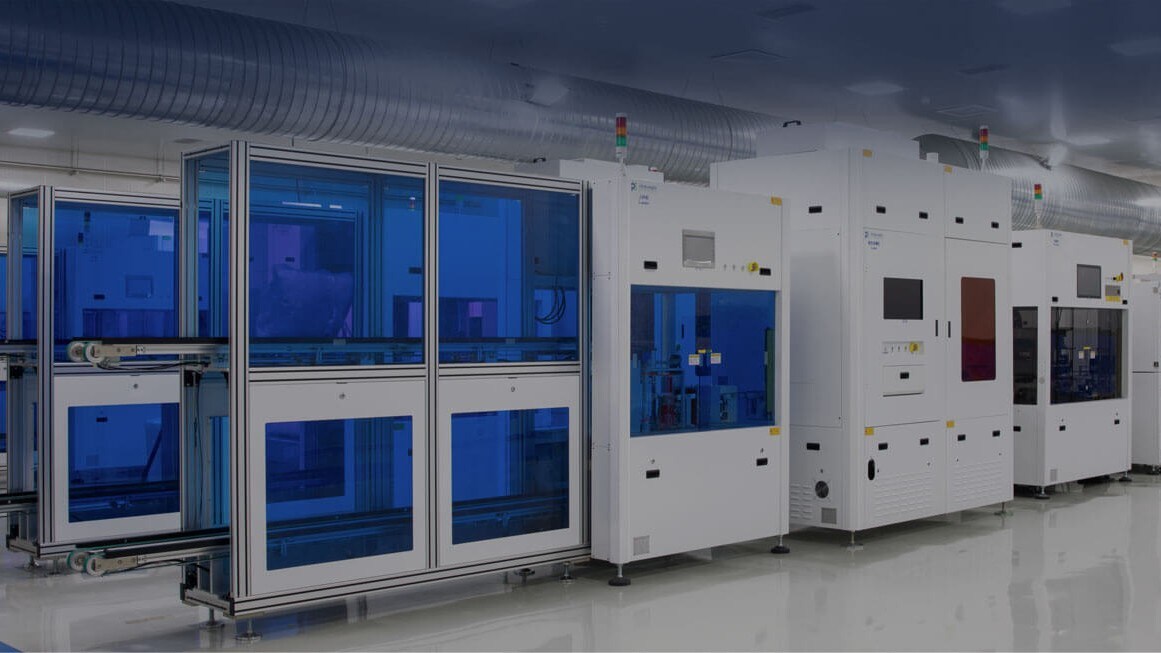
The company has five manufacturing units in Hyderabad. Its total annual installed capacity for solar cells stands at 2 GW, while its solar module production capacity is 4.13 GW.
Order Book
As of July 31, the company had a total order book of Rs 5,926.6 crore, out of which 25% are from the public sector undertakings and government entities, while the rest is from private players.
The order book includes orders for non-domestic content requirement solar modules, domestic content requirement solar modules, solar cells and EPC projects.
Shareholding Pattern
The total outstanding number of shares for PEL before the initial public offering stands at 42.2 crore. Promoter and promoter groups hold 72.23%, while 26.12% of equity is classified as public shareholding, which includes shares held by the firm's senior management, directors and other authorised representatives. The shareholding by employee trust stands at 1.65%.
Post the public offering, the promoter shareholding will decrease to 60.04% and public shareholding will expand to 38.41%, as per NDTV Profit calculations.
Financials
PEL revenue has grown a compounded annual growth rate of 106% over the last three years. The company has also seen a turnaround in terms of financials. In fiscal 2022, the company had posted a net loss of Rs 14.4 crore, while it posted a net profit of Rs 231.4 crore in the last fiscal.
The margin has also improved significantly over the last three years to 15.2% in 2023–24 from 3.9% in fiscal 2022.
Key Risks
The company's top 10 customers account for 66.2% of the total revenues. Loss of any key customers could impact business operations.
All of the company's manufacturing facilities are located in Telangana which exposes them to potential geographical concentration risks.
Under-utilisation of capacities and inability to expand can impact the business.
The company's operating markets are highly concentrated.
Company is dependent on projects awarded by government entities and public sector undertakings.

-
Rs 50-Lakh Gold In Bank Locker, Rs 3 Lakh Of Protection: The Gap Most Families Don't Know About

The RBI ties a bank's liability to the annual locker rent and families who want to insure their jewellery face a separate question about how to prove what was inside.
-
The More Food Turns Into Fuel, The Harder It Is To Read Agricultural Markets | The Reason Why
A policy designed to reduce dependence on imported fuel can create new pressures elsewhere in the food economy.
-
Your iPhone Costs 12 Grams Of Gold, A Car About 100. What Does Your Life Weigh?
Measured in rupees, almost everything looks more expensive than it did a generation ago. Measured in grams of gold, a lot of it has become cheaper.
-
Gold Is Rs 22,000 Cheaper Than A Month Ago. Should You Buy Amid The Wedding Season?
Gold's potential slide to $3,500 could save around Rs 4,700 per 10 grams, but a soft inflation print could just as easily push prices back up. One way to split the risk is to buy in parts, some now and the rest after the Fed's Dec. 9 decision.
-
AI Agents Are Gaining Power. Who Governs Them?
Artificial intelligence agents promise to transform productivity by moving machines from assisting decisions to executing them. But as organisations delegate greater authority to these AI-agents, they must first establish who controls that authority and who remains accountable when things go wrong.
-
Why Swapping Your Old Gold Can Trigger A Rs 5 Lakh Tax Bill, And How You Can Avoid It Legally
Swapping old gold for new is taxed as a sale and a fresh purchase. Getting your own gold remade can cut most of that bill, though it has its own costs.
-
The AI Trade is Done. The Real Opportunity for Investors Starts in 2027 | Unhedged Position
As pureplay AI stocks plunge and circular, capex-led financing unwinds, 2027 is set to be a year of reckoning for AI companies. Yet the bust clears the way for a better opportunity for investors in 2027 -- shifting the spotlight from AI builders to the companies using AI.
-
Leadership As Mission: Why The Age Of AI Demands More Human Leadership
Debjani Ghosh examines how AI is changing leadership, arguing that its success must be measured by its impact on people and the accountability of those guiding its use.
-
We May Need Another Tukaram Mundhe To Fight Air Pollution | The Reason Why
Developers may install basic measures such as sprinklers and green nets, resume work, and continue violating rules when this equipment stops working.
-
Extracting Value From Battery Scrap Could Be Challenging For India | The Reason Why
A discarded lithium-ion battery still contains valuable materials such as lithium, nickel and cobalt. These can be recovered and reused. When such batteries are crushed and shredded, they produce a dark powder called black mass.









