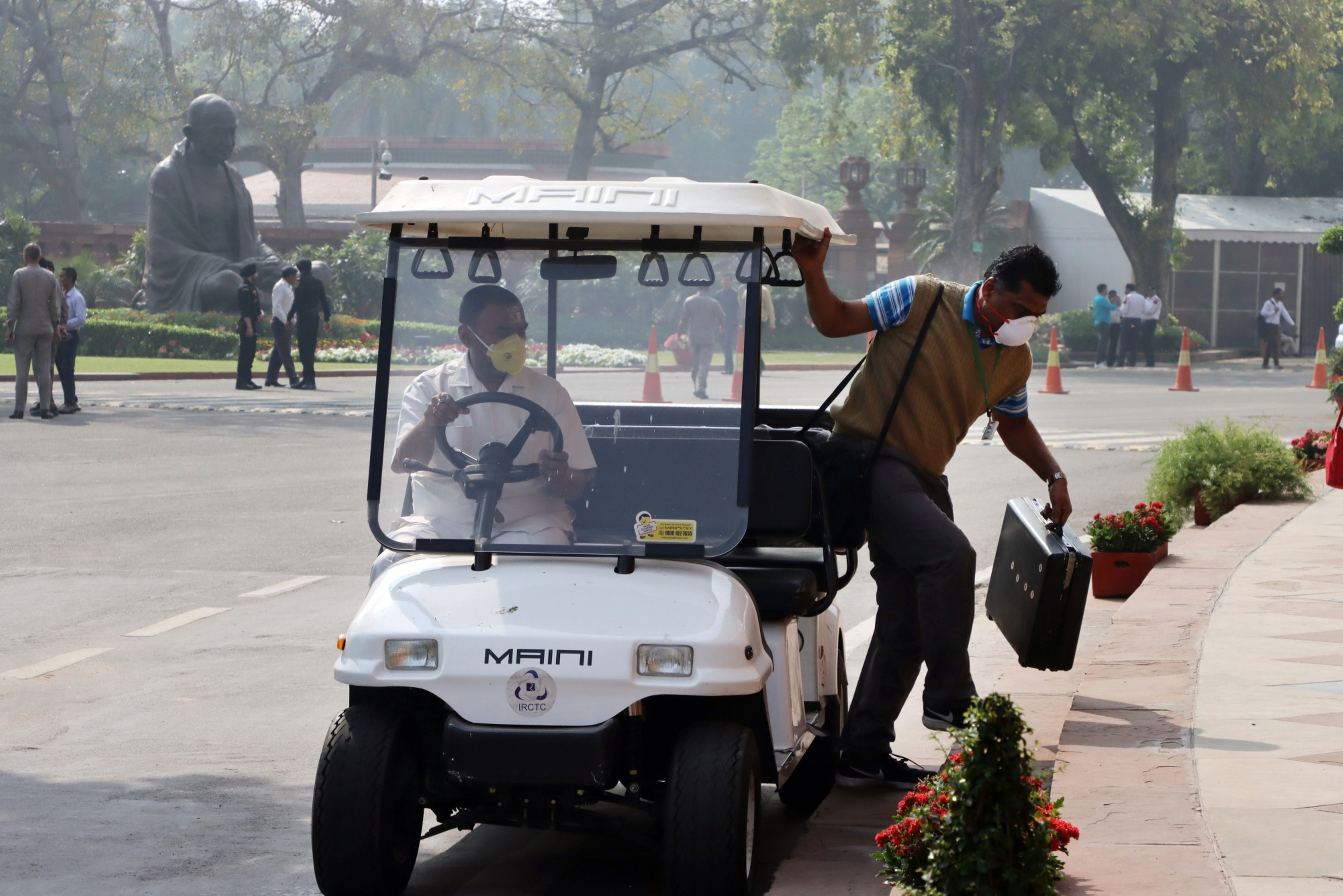
The coronavirus pandemic will impact sectors like trade, hotels, transport, and communication and push India's fiscal deficit to 3.88 percent of gross domestic product this fiscal, a report said on Thursday.
According to SBI Research's Ecowrap report, March is severely affected by travel and transport curbs, which will have a spillover effect on growth. "Even Covid-19 will have an impact on GDP through Trade, Hotels, Transport, Communication and Services related GDP. As the March month is severely affected by travel and transport curbs, we believe that the Q4 nominal GDP may impart a 1.4 percent decline in FY20 GDP.
"Thus, considering the impact of Covid-19 on GDP, the new fiscal deficit will be 3.88 percent of GDP," the report said. The government had raised the fiscal deficit target to 3.8 percent of the GDP from 3.3 percent pegged earlier for 2019-20 due to revenue shortage.
According to the report, based on current tax revenue trends, additional expenditure rationalisation of Rs 1.2 lakh crore might be required in the current fiscal if India has to stick to the mandated 3.8 percent fiscal deficit target. However, the report added that it will be completely foolhardy to stick to any mandated fiscal rules in times of current crisis that is now threatening to rip apart the entire global financial ecosystem.
"Apart from fiscal measures we believe that government may think of unconventional fiscal measures like tax moratoriums, payment extensions on social charges, loan guarantees and wage subsidies for workers who cannot work or move to part-time roles if Covid-19 in India reaches to third or fourth stages," the report said.
Referring to the fall in global oil prices, the report said the government may limit fall in retail prices and further increase the excise duties. "(We)...strongly recommend that the increased excise revenue from oil should not be used for bridging the fiscal gap and pleasing the markets; rather sound economics demands it must be used as a fiscal package for income support to the people working in the unorganized sector who are already facing the brunt of loss of jobs," it said. Globally, state loans, income subsidies and tax deferrals are the most common fiscal packages being offered.
Essential Business Intelligence, Continuous LIVE TV, Sharp Market Insights, Practical Personal Finance Advice and Latest Stories — On NDTV Profit.



















:max_bytes(150000):strip_icc():focal(722x523:724x525):format(webp)/Savannah-Guthrie-mother-Nancy-Guthrie-020226-02-0368cb6ddb864bf09919fd100fe546b0.jpg?im=FeatureCrop,algorithm)