SEBI Details How Zee Promoters Goenka And Chandra Diverted Funds
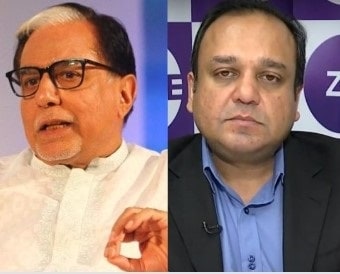
The Securities and Exchange Board of India, in a confirmatory order on Monday, barred Zee Entertainment's promoters Subhash Chandra and Punit Goenka from holding managerial and board positions.
The regulator has barred the father-son duo from holding key managerial or board positions in four Zee entities, namely Zee Entertainment Enterprises Ltd., Zee Media Corp., Zee Studios Ltd., and Zee Akaash News Pvt.
The bar also extends to any entity that's formed pursuant to the merger or demerger of any of these entities. This should be seen in light of the recent NCLT approval to the Zee-Sony merger. According to the scheme, Goenka is to be the managing director of the merged entity for five years.
The SEBI order from this week confirms the regulator's findings of its interim order of June 12.
To do so, SEBI has examined whether the evidence put forward by Chandra and Goenka warranted a modification of its interim findings, specifically:
Whether the Letter of Credit issued by Chandra was made in a personal capacity or as the Chairman of Zee.
Were the transactions undertaken by Zee with seven associate companies genuine, as argued by the parties?
Chandra's LoC
To recap, in its interim order, SEBI had highlighted that Chandra had issued a Letter of Comfort to Yes Bank Ltd. in September 2018 for loans availed by certain associate companies. Later, on the strength of this LoC, Yes Bank had adjusted Zee's fixed deposit of Rs 200 crore for meeting the obligations of the seven entities who had taken the loans.
This was done without the knowledge of the company's board, in violation of the Listing Regulations, the interim order had concluded.
During the personal hearings, Chandra submitted that the LoC was given in his personal capacity as it was not on the letterhead of Zee.
SEBI has dismissed this argument in its confirmatory order.
It has pointed out that the letter mentioned Zee Entertainment. Also, it said, a fixed deposit to the tune of Rs 200 crore was made by Zee the very next day after the LoC. This gives credence to the fact that the letter was issued by Chandra not in his personal capacity but as the Chairman of Essel Group and Zee, the order said.
"Creation of the fixed deposit by Zee was seemingly effective discharge of Chandra's obligation to “ensure” that a fixed deposit of Rs 200 crore would be placed by Essel Group with Yes Bank." - SEBI's confirmatory order
Also, it has questioned why no effective steps were taken by Zee against Yes Bank, if in fact the company believed that the LoC was given by Chandra in his personal capacity.
The Question Of Evidence
The second issue before the regulator was the genuineness of the transactions undertaken between Zee and the seven associate entities. The interim order had noted that the seven associate entities that had borrowed from Yes Bank never repaid Zee. In fact, Zee's own funds were routed via several layered transactions to show that the repayment was done.
Like in its interim findings, SEBI's confirmatory order, too, relies on bank statements to prove that the transactions weren't genuine.
Chandra and Goenka, during the personal hearings, submitted that the transactions undertaken by Zee with related parties were purely commercial in nature, and to assume otherwise would be unjust. They also contested the regulator's reliance on bank statements. They argued that bank statements by themselves can never lead to a conclusion that transfer of money is pursuant to a sham transaction or on account of circuitous transactions.
In its confirmatory order, the regulator has agreed with this argument saying per se a bank statement cannot lead to conclusion of a sham transaction. But it goes on to point out that an entry in the bank statement shows that a particular transaction has taken place in the account of the holder.
"It is only when the digital footprint of the said transaction is traced along with the attending circumstances and the entities involved in the transactions, one can determine whether it was part of a circular transaction or not."- SEBI's confirmatory order
The Fund Diversion
After a thorough examination of the statements, SEBI has unraveled several layers of transactions through which the promoters diverted Zee's funds.
The pattern involved was almost the same for all the seven associate entities, SEBI has shown:
At first, Zee, its subsidiary, or any other listed company of the group transferred its funds to a related party or parties with whom it has business relationships.
The recipient transferred identical funds to conduit entities within a day or two. For a few days, these funds are transferred between these conduit entities before ultimately reaching Sprit Infrapower and Multiventures Pvt., a promoter entity of Zee; or Churu Enterprises, an entity owned by Punit Goenka and his mother Sushila Goenka.
These entities finally transferred funds identical to those they received from conduit entities to associate entities.
In the final leg of the transactions, an amount identical to the ones received from the promoter entities is transferred back to Zee, completing the cycle of fraudulent transactions.
All these associate entities had negligible balances prior to the receipt of funds from promoter entities. In five out of six instances, the money received from Spirit Infrapower or Churu was transferred to Zee within 7 to 27 minutes, SEBI said.
In all instances, where Spirit Infrapower transferred funds to associate entities, the money originated from Churu Enterprises on the same day. This prima facie, according to SEBI, establishes an orchestration of fund movement, as all of these can't be mere coincidences.
To illustrate, SEBI has shown the pattern by looking at the funds returned by Essel Green Mobility Ltd. The company, a related party of Zee, owed Rs 17.1 crore to Zee on account of appropriations made by Yes Bank. The money was duly returned to Zee on Sept. 27, 2019.
The fund trail demonstrates, according to the regulator's order, that Essel Green Mobility received an identical sum from Pan India Infraprojects a few minutes prior to the repayment. The trail also demonstrates that Pan India received the money from Spirit Infrapower, a promoter entity of Zee.
Spirit Infrapower, in turn, received these funds from Zee or other entities of Zee, including Zee Akaash News.
Thus, considering that these transactions could be part of a scheme to divert Zee's funds, the market regulator has prima facie found Goenka and Chandra in violation of its Listing Regulations as well as the Unfair Trade Practices regulations.
It has ordered further investigation into the matter, which has to be completed within eight months.

-
Rs 50-Lakh Gold In Bank Locker, Rs 3 Lakh Of Protection: The Gap Most Families Don't Know About

The RBI ties a bank's liability to the annual locker rent and families who want to insure their jewellery face a separate question about how to prove what was inside.
-
The More Food Turns Into Fuel, The Harder It Is To Read Agricultural Markets | The Reason Why
A policy designed to reduce dependence on imported fuel can create new pressures elsewhere in the food economy.
-
Your iPhone Costs 12 Grams Of Gold, A Car About 100. What Does Your Life Weigh?
Measured in rupees, almost everything looks more expensive than it did a generation ago. Measured in grams of gold, a lot of it has become cheaper.
-
Gold Is Rs 22,000 Cheaper Than A Month Ago. Should You Buy Amid The Wedding Season?
Gold's potential slide to $3,500 could save around Rs 4,700 per 10 grams, but a soft inflation print could just as easily push prices back up. One way to split the risk is to buy in parts, some now and the rest after the Fed's Dec. 9 decision.
-
AI Agents Are Gaining Power. Who Governs Them?
Artificial intelligence agents promise to transform productivity by moving machines from assisting decisions to executing them. But as organisations delegate greater authority to these AI-agents, they must first establish who controls that authority and who remains accountable when things go wrong.
-
Why Swapping Your Old Gold Can Trigger A Rs 5 Lakh Tax Bill, And How You Can Avoid It Legally
Swapping old gold for new is taxed as a sale and a fresh purchase. Getting your own gold remade can cut most of that bill, though it has its own costs.
-
The AI Trade is Done. The Real Opportunity for Investors Starts in 2027 | Unhedged Position
As pureplay AI stocks plunge and circular, capex-led financing unwinds, 2027 is set to be a year of reckoning for AI companies. Yet the bust clears the way for a better opportunity for investors in 2027 -- shifting the spotlight from AI builders to the companies using AI.
-
Leadership As Mission: Why The Age Of AI Demands More Human Leadership
Debjani Ghosh examines how AI is changing leadership, arguing that its success must be measured by its impact on people and the accountability of those guiding its use.
-
We May Need Another Tukaram Mundhe To Fight Air Pollution | The Reason Why
Developers may install basic measures such as sprinklers and green nets, resume work, and continue violating rules when this equipment stops working.
-
Extracting Value From Battery Scrap Could Be Challenging For India | The Reason Why
A discarded lithium-ion battery still contains valuable materials such as lithium, nickel and cobalt. These can be recovered and reused. When such batteries are crushed and shredded, they produce a dark powder called black mass.









