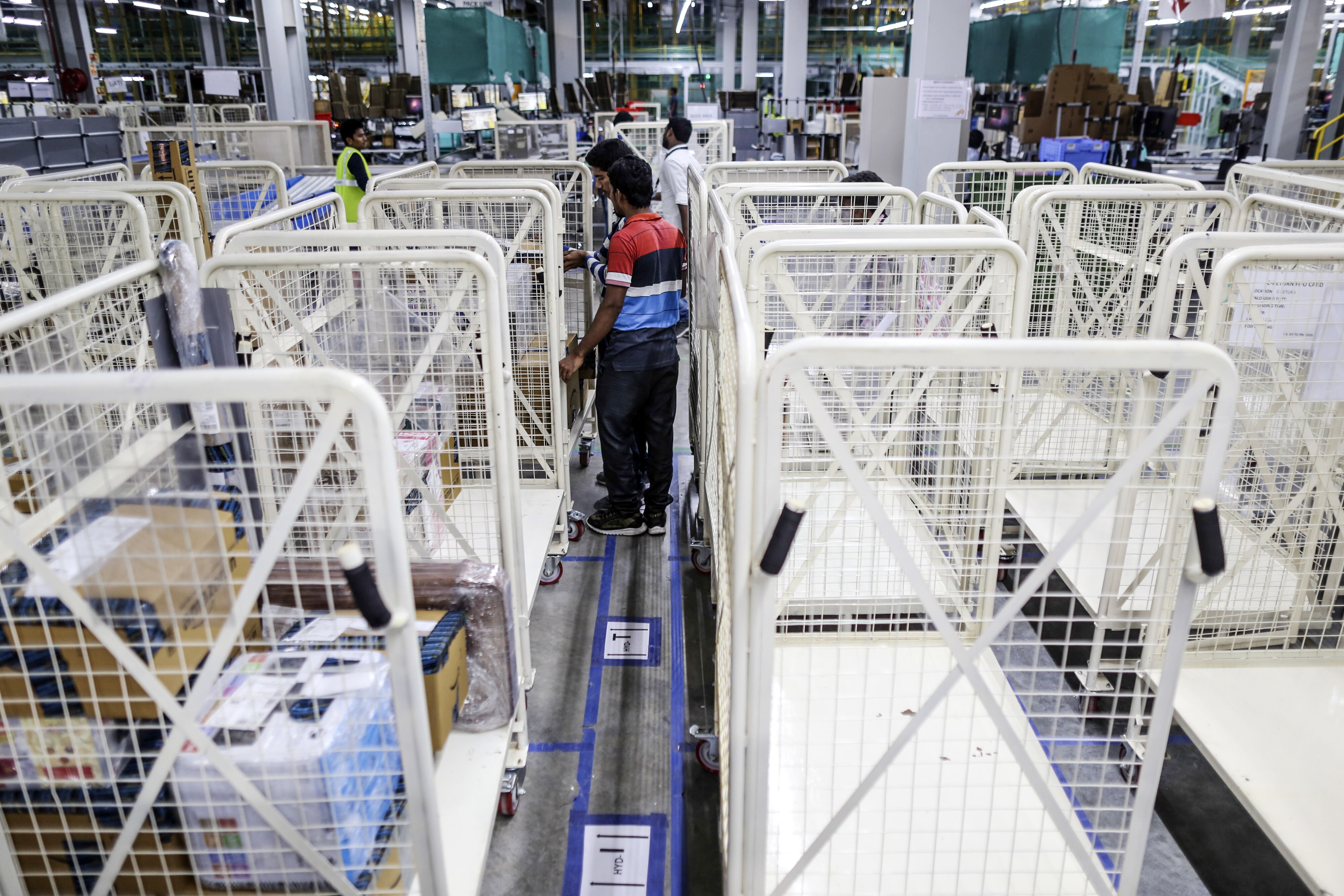
The Department for Promotion of Industry and Internal Trade has convened a meeting of industry representatives from IT and e-commerce sectors on Jan. 14 to discuss the merits and de-merits of draft e-commerce policy on data storage, sources said.
Representatives from different companies including Accenture, Adobe, Facebok, Genpact, Google, HCL, Infosys, Intel, Microsoft and TCS are expected to participate in the deliberations, they said.
Besides, officials from Nasscom, E-commerce Council of India, Informational Technology Industry Council, CII and FICCI would also attend the meeting, they added.
The meeting will be chaired by an additional secretary level officer of the DPIIT. The meeting assumes significance as the department is working to release the national e-commerce policy by the end of the current financial year.
The government in February last year released a draft national e-commerce policy, proposing setting up a legal and technological framework for restrictions on cross-border data flow and also laid out conditions for businesses regarding collection or processing of sensitive data locally and storing it abroad.
Several foreign e-commerce firms have raised concerns over some points in the draft pertaining to data. The department has received huge response on the draft and it is examining all the views and comments.
As the draft policy includes several provisions related to data, the department is also looking at the Personal Data Protection Bill approved by the Cabinet last month.
Further, sources said that issues which needs to be looked upon include whether India should allow free flow of data across the border or inhibit or regulate it in some manner; and whether data localisation is required or not. "These are the issues which have lot of pros and cons," they added.
The Personal Data Protection Bill spells out a framework for handling of personal data including its processing by public and private entities. A company may have to pay a penalty if found violating norms under the Personal Data Protection Bill.
Essential Business Intelligence, Continuous LIVE TV, Sharp Market Insights, Practical Personal Finance Advice and Latest Stories — On NDTV Profit.